Ceramic Window Tint in Whiting, NJ: Heat, UV Protection, and New Jersey Tint Law Basics
What ceramic window tint can do for heat and UV, how long a quality installation can last, and the New Jersey rules that apply to windshields and front side windows.
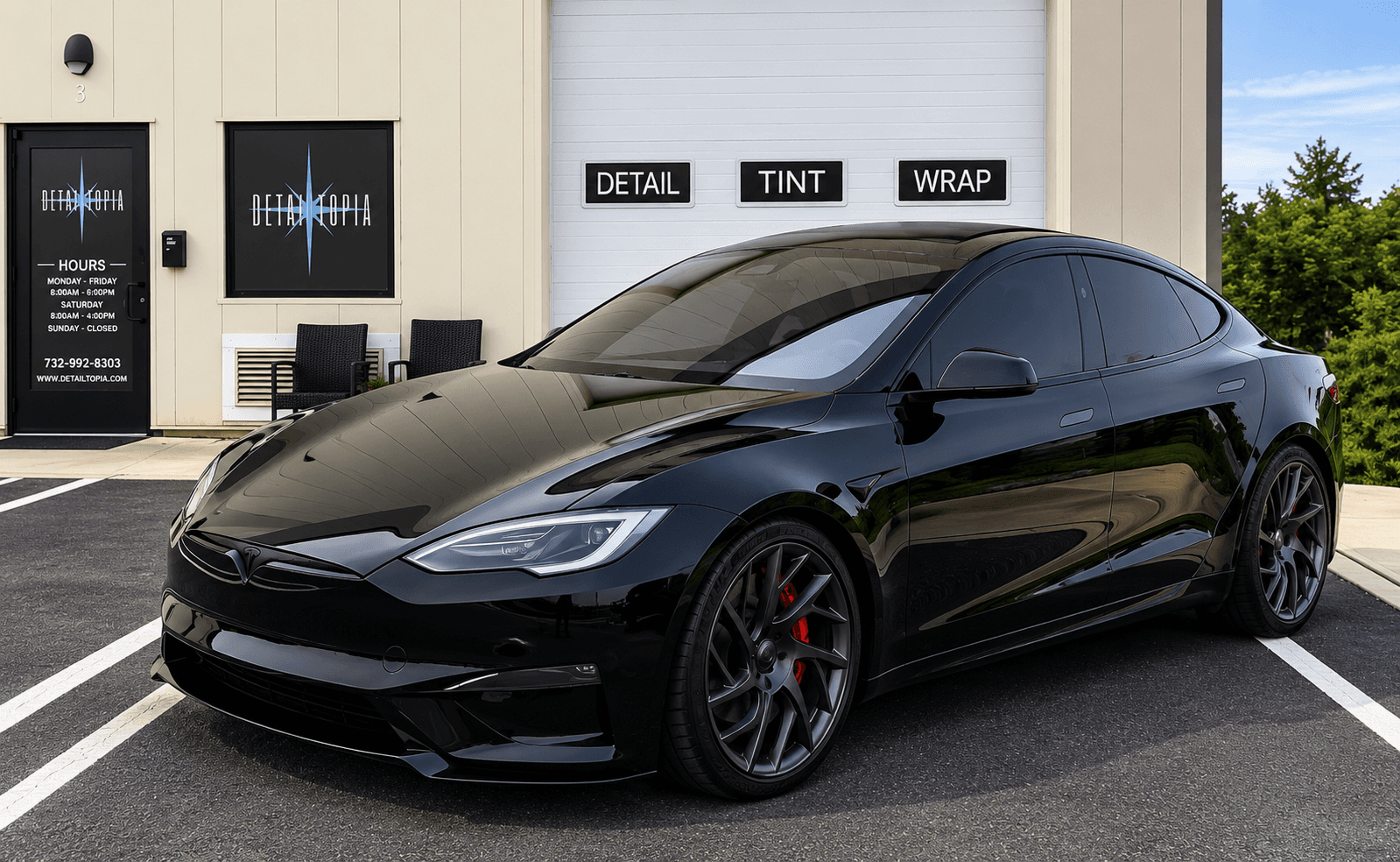
If you drive around Ocean County in the summer, you already know how quickly a cabin can heat up in the sun. Ceramic window tint is one of the most common upgrades we discuss at Detailtopia, our shop at 19 Fedornak Fwy in Whiting, because it can improve comfort, help manage UV exposure, and give a vehicle a cleaner, more finished look. This guide explains what ceramic film is meant to do, how long a quality installation can last, and what New Jersey law says about add-on tint on the windshield and front side windows.
What ceramic window tint is meant to do
Ceramic film is a premium category of automotive window film. At Detailtopia, we discuss it as an upgrade when cabin comfort and heat management are priorities, not simply when someone wants a darker appearance. Both standard and ceramic films can change how a vehicle looks and help manage sunlight. The difference is in how the film is constructed, and the exact benefits depend on the specific film, the glass, and the conditions you drive in. You can review those options on our automotive window tinting page, then we will match a film to the vehicle during a consultation.
A darker shade is not automatically a higher-performing film. Heat management and optical clarity should be reviewed together with appearance and visibility. During a consultation we compare suitable options rather than assuming the darkest film is the right choice for every driver.
Heat, glare, and everyday comfort
Quality window film can reduce incoming solar heat and harsh glare, which makes bright drives more comfortable, especially on highway commutes through Toms River, Lakewood, and the rest of Ocean County. Ceramic films are often chosen because they are designed with heat-rejection performance in mind, while still aiming for a clear view out of the glass.
That comfort is practical. A cooler cabin can make summer errands and school drop-offs less draining. Glare reduction can also make it easier to see in strong afternoon light. Film does not turn a hot parking lot into shade, and it does not replace air conditioning. It is one part of a more comfortable daily drive.
UV protection for you and the interior
Window film can help reduce UV exposure through treated glass. That matters for drivers and passengers who spend a lot of time on the road, and it can also help limit sun-related wear on interior materials such as dashboards, trim, and upholstery. Film complements other sun-protection habits; it does not replace them. It also does not prevent every cause of fading. Careful vehicle care still matters.
When we select film, UV protection is considered alongside heat management, clarity, and the look you want for the vehicle. Those factors belong in the same conversation, because a film that looks right but is difficult to see through, or one that meets a legal requirement but does not address the heat you actually feel, is not a complete answer.
How long ceramic window tint lasts
Ceramic window tint is typically a long-term installation, not a seasonal accessory. How long a film continues to look and perform as intended depends on the product selected, the condition of the glass, the quality of the installation, local climate, and how the windows are cared for after the film is applied.
We do not use a single year count as a stand-in for every vehicle. Manufacturer warranties, when they are offered, should be reviewed during your consultation so you understand what is and is not covered. A clean installation and the right care after pickup do as much to protect the result as the film itself.
After installation, follow the instructions provided at pickup, including when you can lower the windows and how to clean treated glass. Temporary moisture or haze can be visible while film dries. Use film-safe cleaners and a soft cloth, and avoid abrasive pads or tools near the film and edges. If you notice lifting, persistent bubbling, or unexpected marks, have the installation checked rather than trying to adjust it yourself.
New Jersey tint law basics
Film choice should start with what is allowed on your vehicle, not only with the look you want.
The official 2026 New Jersey Driver Manual states that New Jersey law prohibits add-on tinting on windshields and front side windows, citing N.J.S.A. 39:3-74. A separate consumer-protection statute, N.J.S.A. 56:8-117, requires New Jersey tint retailers to post this notice: “NJ STATE LAW PROHIBITS ADD-ON TINTING ON WINDSHIELDS AND FRONT SIDE WINDOWS.” That same law says a shop may not install add-on film on the windshield or the front side windows of a vehicle registered in New Jersey unless the purchaser shows a medical exemption certificate issued under N.J.S.A. 39:3-75.1.
The New Jersey Motor Vehicle Commission explains the medical-exemption process on its Window Sun-screening for Medical Reasons page. In short, windshield and front side window sunscreening is allowed only with an MVC medical exemption. You must receive approval from the MVC before the film is installed, and the approval documents need to be kept in the vehicle. This article is a general overview, not legal advice, and requirements can change. Review the current MVC guidance and the statutes before you choose coverage.
The prohibition described above is specific to windshields and front side windows. It does not, in the cited statute and consumer-protection law, impose the same add-on ban on rear side windows or the rear window. Even so, coverage should still be confirmed against current rules for your vehicle, including any existing factory tint. A sunstrip across the upper windshield and a full-windshield film are different applications, and not every application is permitted for every vehicle. We will review current New Jersey requirements with you before a job is scheduled. We do not promise that every requested shade or application is lawful.
Factory-tinted glass and aftermarket film are not the same thing. If your vehicle already has privacy glass, tell us which windows you want treated so the combined appearance and legal requirements can be reviewed together.
Choosing coverage for your vehicle
Common coverage discussions include the two front side windows, all cabin windows (typically side and rear glass, with the windshield excluded), a sunstrip across the upper windshield, or a windshield film where it is legally permitted. Each option should be reviewed for visibility, appearance, and current New Jersey rules. Not every application shown on a menu is permitted for every vehicle.
If you are deciding between standard and ceramic film, think about how you use the car. Drivers who want a darker look and a more budget-friendly starting point may consider standard film. Drivers who want a stronger focus on heat rejection, clarity, and a longer-term ownership experience often look at ceramic. We can walk through those options in the shop or as part of a quote request.
How Detailtopia approaches a tint project
A clean installation starts before the film is laid on the glass. We review the vehicle, glass condition, any existing film, and the coverage you want. Glass cleaning and contamination control are important to a clear result. If old film needs to be removed, that should be included in the quote.
Film is then fitted to the glass, positioned with installation solution, and carefully squeegeed. Edge finishing and inspection matter. Professional installation helps avoid poorly fitted edges, trapped contamination, and unnecessary rework.
Detailtopia is based in Whiting and serves drivers throughout Ocean County and surrounding New Jersey areas. If you are ready to talk through film options, visit our automotive window tinting page or request a quote with your vehicle year, make and model, the windows you want treated, and whether old film is present. You can also call us at (732) 992-8303.
FREQUENTLY ASKED QUESTIONS.
Is ceramic window tint legal in New Jersey?
+
Does a darker shade reject more heat?
+
How long does ceramic window tint last?
+
Can you tint glass that already looks dark?
+
How do I get a ceramic tint quote in Whiting?
+
READY TO TALK THROUGH YOUR PROJECT?
Request a quote or call Detailtopia at (732) 992-8303. We are at 19 Fedornak Fwy, Whiting, NJ 08759, and we work with drivers throughout Ocean County and surrounding areas.